
Development Cost Charges Explained for Vancouver and Burnaby Homeowners
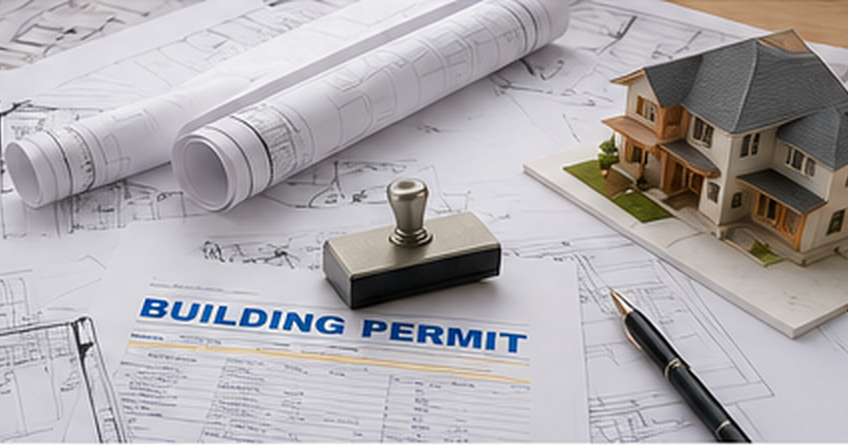
When you build a new home, duplex, laneway home or multiplex, the City collects a set of one-time charges before it issues your building permit. They pay for the roads, water and sewer mains, parks and community facilities that growth needs. Homeowners often call them all “DCCs,” but in practice they are several separate charges set by different bodies, and together they can add tens of thousands of dollars per home to a project.
This guide explains what each charge is, how Vancouver and Burnaby apply them in 2026, roughly what they cost and how to plan for them.
The charges that make up the total
For a typical residential project in Vancouver or Burnaby, the bill can include:
| Charge | Set by | What it pays for |
|---|---|---|
| City Development Cost Charges (DCCs) — called Development Cost Levies (DCLs) in Vancouver | The City | Roads, water, sewer, drainage and park land needed for growth |
| Amenity Cost Charges (ACCs) | The City | Community amenities such as community centres, libraries and child care |
| Regional DCCs | Metro Vancouver (collected by the City) | Regional water, liquid waste (sewer) and park land |
| Regional Transportation DCC | TransLink (collected by the City) | Transit projects in TransLink’s investment plan |
| School Site Acquisition Charge | School district (collected by the City) | Land for new schools |
These are separate from building permit fees, plan review fees and the water and sewer connection fees covered in our servicing guide. Amenity Cost Charges are newer: the Province allowed municipalities to adopt them in 2023, Burnaby brought them in on July 1, 2024 and Vancouver’s took effect on September 30, 2026.
How it works in Burnaby
Burnaby charges its DCCs and ACCs per unit, by density category. The City’s development funding page lists these rates (effective July 1, 2024):
| Category | City DCC | City ACC | Total |
|---|---|---|---|
| Low density residential (per primary unit or lot, includes single-family) | about $54,870 | about $26,963 | about $81,833 |
| Medium density residential (per unit, includes townhouses) | about $37,423 | about $18,874 | about $56,297 |
| High density residential (per apartment unit) | about $25,360 | about $13,481 | about $38,841 |
A few points to know:
- Small-scale multiplexes and laneway homes have their own guidance from the City, and the category that applies depends on the project. Our earlier Burnaby articles used the medium-density rate for laneway homes; confirm with the City’s fee estimator for your design.
- Burnaby amended its ACC bylaw effective July 28, 2026, so check that the rates you’re quoted are current.
- Credit for a demolished home is generally given, so replacing one house with one house costs less than adding new units; ask the City how credits apply to your lot.
- Regional, TransLink and School District 41 charges are added on top. Burnaby lots fall in Metro Vancouver’s Vancouver or Fraser sewerage area depending on location, which changes the regional rate slightly.
- Installment payments may be available in some circumstances, under a provincial regulation that was amended for charges imposed from January 1, 2026.
How it works in Vancouver
Vancouver charges its Development Cost Levies by floor area rather than per unit. For residential projects at or below 1.2 FSR, which covers most houses, duplexes, multiplexes and laneway homes, the City’s DCL bulletin lists a combined city-wide and utilities levy of $8.92 per square foot (rates approved for September 30, 2024). In December 2025, Council approved a temporary 20% reduction to the city-wide, utilities and area-specific DCLs, and kept it in its July 2026 financing growth update, so the rate you pay today should be lower. Confirm the current figure in the bulletin.
On top of that, Vancouver’s new Amenity Cost Charge applies to applications submitted on or after September 30, 2026:
| Residential density | ACC from Sept 30, 2026 | Sept 30, 2027 |
|---|---|---|
| At or below 1.2 FSR and laneway houses | $2.32 / sq ft | $2.39 / sq ft |
| Above 1.2 to 1.5 FSR | $5.00 / sq ft | $5.15 / sq ft |
| Above 1.5 FSR | $5.00 / sq ft | $10.30 / sq ft |
Vancouver exempts alterations that add no floor area, small residential units of 320 sq ft or less from DCLs, and additions under 500 sq ft to existing buildings with fewer than four units. For the ACC, a new building whose floor area does not exceed the building it replaces is exempt. Applications already in stream before a rate change are generally protected if the building permit is issued within 12 months.
Regional and transit charges
Metro Vancouver collects regional water, liquid waste and park land DCCs through each city. On July 24, 2026, its board rolled back the 2026 increases to 2025 levels. For a single-family lot in the Vancouver Sewerage Area, the regional total dropped from about $29,196 to about $21,941 per unit for permits issued from that date, with about $19,874 per townhouse and $13,392 per apartment. Rates are scheduled to rise again on January 1, 2027 (to about $28,322 for a single-family lot), so permit timing matters.
TransLink‘s regional transportation DCC for 2026 is about $3,416 per single-family dwelling and $2,837 per duplex or townhouse unit. It doesn’t apply to units of 29 m² or less or to permits for work valued at $50,000 or less.
What the provincial rules allow
Under BC’s Local Government Act, developments with fewer than four self-contained homes are exempt from DCCs unless the city’s bylaw says otherwise, and many Metro Vancouver bylaws now charge them. Cities can also waive or reduce charges for not-for-profit and certain affordable rental housing. In June 2026, the federal and provincial governments announced funding intended to cut development charges on multi-unit housing by up to 50% in “priority communities,” but as of Burnaby’s June 2026 statement, which communities qualify and when it starts were not yet known.
What this means for your project
- Budget for charges as their own line. They are separate from construction cost, which typically runs about $250 to $350 per square foot for a mid-range new home in Vancouver or Burnaby (approximate, with no upper limit for premium finishes).
- Plan for cash at permit issuance. Charges are due before the permit is issued, so check early with your lender how they will be funded.
- Watch the dates. Rates change on set dates, and in-stream protection usually depends on when you apply and when the permit is issued.
- Ask about credits and waivers. Demolition credits, small-unit exemptions and affordable housing waivers can change the total significantly.
- Get a written estimate. Both cities can estimate charges for a specific design; ask early, before the unit mix is final.
Related reading
- Laneway house cost in Burnaby: a realistic budget breakdown
- How many homes can I build on my Burnaby lot?
- Construction financing in BC: how draw mortgages work
- Water, sewer and storm connections for a new home
- The building permit process in Vancouver and Burnaby, step by step
Wondering how development charges will affect the budget for your lot and unit mix?
Sources
- City of Burnaby: Development funding program (DCCs and ACCs)
- City of Burnaby: Statement on federal-provincial development charge funding, June 2026
- City of Vancouver: Development Cost Levies bulletin (PDF)
- City of Vancouver: Amenity Cost Charges bulletin (PDF)
- City of Vancouver: Council report on temporary DCL reduction, December 2025 (PDF)
- City of Vancouver: Development contributions update, July 2026
- Metro Vancouver: Development cost charges
- TransLink: Development cost charges
- Province of BC: Development cost charge exemptions
Charges and figures are approximate and change regularly. Confirm current rates, credits and exemptions for your property with your municipality.

Related Posts


2 Comments
Comments are closed.


Recent Works


[…] Permits and City charges: permit fees and one-time development charges, paid before the building permit is issued. See development cost charges explained. […]
[…] Development cost charges explained […]